
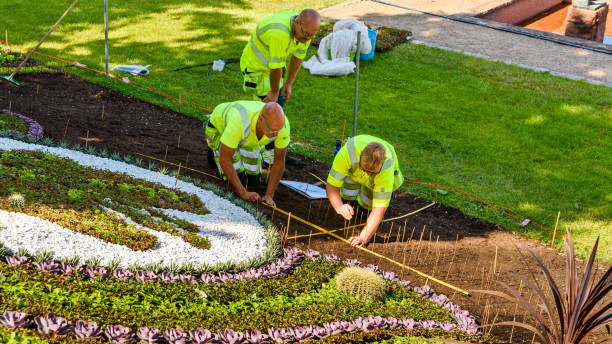
A well-edged garden not only looks tidy, but it also tells a story. It frames your borders, lifts your planting, and quietly says, “This space is loved.”
If you’re curious about how to craft that charm yourself, read on. You’re in for something special.
Page Contents
Pick the Perfect Materials to Set the Scene
The materials you choose for your garden edging will set the tone for the space. Think of them as the frame to your outdoor canvas, supportive but never overbearing.
Natural stone is a classic for good reason. It weathers well, stays put through the seasons, and adds a touch of timeless elegance.
If you can source it locally, you’ll cut down on cost and environmental impact. Nothing wrong with a bit of sustainability in style!
Logs offer a gentler look. They nestle comfortably into garden beds, softening the transition between lawn and planting. Because they decompose gradually, they’re perfect for a garden that embraces the ebb and flow of the seasons.
Then there’s bamboo—lightweight, distinctive, and wonderfully suited to more exotic schemes. It’s especially at home alongside ferns or water features.
Practicalities matter. So, consider not just what looks beautiful today, but what will hold up tomorrow. Look for materials that can withstand the damp British weather and still maintain their charm.
Salvage yards and smaller garden shops often offer more characterful options than the larger chains, and the hunt is half the fun.
Whatever you choose, let it reflect the atmosphere you’re after. Crisp and structured? Go with cut stone or tightly packed timber. Wild and whimsical? Irregular logs or woven branches might be more your pace.
Map It Out Before You Break Ground
Before a single stone is placed or spade lifted, take time to plan. A well-considered layout saves effort and the odd bit of swearing down the line.
Start with a rough sketch, not architectural blueprints, just something to anchor your ideas. Walk the space with a hosepipe or string in hand, laying out the lines where you imagine your borders falling.
It’s a surprisingly helpful way to sense how the garden wants to flow.
Paths around vegetable beds need to be practical. There should be space to trundle a wheelbarrow without flattening the lettuce. Near seating areas, however, you’ll want softer shapes—curves that feel relaxed rather than regimented.
Likewise, measure carefully. Accurate dimensions ensure you won’t underbuy materials or spend the afternoon dashing to the garden centre.
Additionally, think about growth. That dainty shrub seems innocent now, but give it a few summers, and it could be spilling over your path with abandon. Leave enough room for plants to stretch without encroaching on walkways or edging lines.
And if inspiration runs dry? Have a nose around local gardens, parks, or online galleries. Pay attention to how edging shapes movement and creates pockets of purpose within the space.
Lay the Groundwork for Long-Term Results
If edging is the frame, groundwork is the canvas beneath it. Skimping here is like hanging wallpaper on crumbling plaster; it can look fine at first, but time will tell otherwise.
Begin by clearing the area. That means shifting stones, raking away leaves, and trimming back grass or trailing plants. What you want is a clean, level base, free of anything that might interfere with stability.
Use a spade or edging tool to neaten the line. Remove any excess turf and dig down to accommodate whatever material you’ve chosen. The base should be a few centimetres deeper than your edging to allow for a firm set.
For heavier materials or areas prone to waterlogging, work in a layer of coarse sand or fine gravel. This improves drainage and offers a stable bed that’s less likely to shift after a wet winter.
Take your time. Straight lines should feel intentional, while curves ought to follow a natural sweep. Don’t be afraid to adjust as you go, as garden design is rarely a straight path.
Build Your Borders with Care and Character
It’s time for the satisfying part. Putting your chosen materials in place.
With stone, think of it as building a miniature wall. Lay the largest pieces first, ideally those with a flat bottom, and nestle them securely into the ground. Smaller stones can fill the gaps, like a puzzle where each piece earns its place.
Wooden edging, whether logs or planks, needs to be buried a third into the soil for strength.
As you press them in, backfill with firm earth, packing it tightly while leaving a bit of wiggle room for swelling. Rain and wood have a way of negotiating behind your back.
For bamboo, create clusters. Tuck the stalks in closely, pressing them deep enough to stay upright without leaning. It’s helpful to use a guide—such as a plank or taut string—to maintain an even line.
If you’re unsure about installing certain materials, consult professional landscapers who can help with more ambitious layouts or tricky terrain.
Step back regularly. Viewing your handiwork from a distance can reveal quirks and wonky patches that aren’t obvious up close.
This is where good edging becomes great, when the line looks just as lovely from the back door as it does from a crouch in the flowerbed.
Finish the Look with Soil or Mulch
Once the structure’s in, it’s time to finesse the gaps, because what surrounds the edge matters just as much.
For garden beds, mulch is your friend. It brings a rich, earthy finish that protects the soil and keeps weeds at bay. Over time, it breaks down into nutrients, feeding your plants without fuss.
Choose a mulch with a colour and texture that complements your edging.
Dark bark looks splendid against pale stone, while finer materials suit more delicate borders. In areas with stone, you might opt for a blend of soil and gravel to echo the edging’s tone.
When filling, allow the material to rise slightly above the border. About two centimetres does the trick. This gentle mound encourages water to run inward, nourishing roots instead of pooling where it’s not wanted.
Be thorough as you tuck the fill around each edge. There’s no need to tamp it like concrete, but you’ll want it firm enough to withstand a good downpour.
Keep Your Edging Looking Sharp
Like anything worth keeping, edging needs the occasional check-up.
After heavy rain, give your borders a once-over. Stones can settle or shift, especially if the soil beneath them wasn’t compact enough. Realign as required before the movement becomes noticeable.
Wood requires more attention. Bamboo and logs are charming but can suffer in persistent dampness. Sweep away fallen leaves and cut back any creeping growth that traps moisture.
If you’re using untreated wood, consider a non-toxic preservative to extend its lifespan.
Stone, though low-maintenance, isn’t immune to the odd weed poking through. Deal with them swiftly before they establish themselves. A quick tug after rain, when the soil’s soft, usually does the job.
And mulch will eventually fade and sink into the soil. That’s its purpose. Replenish once or twice a year to keep things tidy. A fresh layer boosts looks and reinforces the edging’s practical role.
Conclusion
Gardens speak quietly, but edging gives them voice.
With the right touch, natural materials can shape spaces that feel both grounded and graceful. So let the lines guide your hands and trust your eye because it’s a craft well worth the care.
Also Read:

Lois Lane is a professional blogger and a seasoned Content writer for wellhousekeeping.com. With a passion for simplifying complex Home Decor topics, he provides valuable insights to a diverse online audience. With four years of experience, Lois has polished his skills as a professional blogger.


