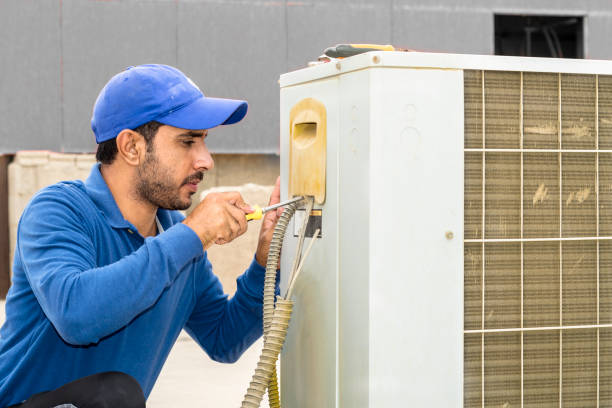

When summer arrives in places like San Diego County, air conditioning becomes more than a luxury—it’s a lifeline. But few people think about the story behind the systems that cool our homes, or what actually goes into installing them properly today. In this blog post, we’ll take a look at how air conditioning installation has evolved, why modern systems are more efficient than ever, and the common mistakes homeowners can avoid when upgrading their AC.
Page Contents
The Surprising History of Home Cooling
The first modern air conditioning system was invented in 1902, not to cool homes, but to reduce humidity in a printing press. It wasn’t until the 1950s that residential systems became widely available, and even then, they were a luxury item. Early ACs were noisy, inefficient, and costly to operate. Over the decades, however, innovations in compressors, refrigerants, and digital thermostats transformed air conditioning into an essential part of everyday life in warmer climates.
Today’s systems are quieter, smarter, and far more energy-efficient than their predecessors. That progress didn’t just happen in the lab—it was also driven by advances in installation practices and building standards.
More Than Just Plug-and-Play
Many people assume that air conditioning installation is a simple plug-and-play job. In reality, it’s a complex process that requires a deep understanding of home construction, electrical systems, airflow dynamics, and energy efficiency standards.
A proper installation takes into account:
- The size and layout of the home or building
- Insulation levels and air sealing
- Local climate conditions
- Ductwork quality and placement
- The occupants’ comfort preferences and schedules
Undersized or poorly installed systems can lead to uneven cooling, higher bills, and a shorter system lifespan. That’s why working with certified technicians who understand local conditions, like those in San Diego County, is so important.
The Energy Factor: Why Installation Quality Matters
Energy efficiency isn’t just about the equipment—it’s also about how it’s installed. According to the U.S. Department of Energy, improper installation can reduce system efficiency by up to 30%. That translates into higher utility bills and more frequent repairs.
Modern air conditioning systems are often rated by their SEER (Seasonal Energy Efficiency Ratio). But even the highest SEER system won’t perform well if it’s not installed correctly. This is where professional installation plays a key role in achieving the comfort and cost-savings you’re promised.
What to Look for in an Installer
While it’s tempting to go with the lowest bid, that can be risky in the long run. A good installer should offer more than just a competitive price—they should provide a comprehensive evaluation of your space, clearly explain your options, and be transparent about warranties and maintenance expectations.
It’s also smart to look for companies that are familiar with local incentives and rebates. In California, there are often programs that help offset the cost of upgrading to energy-efficient systems.
For homeowners in Southern California, Guthrie & Sons offers a detailed overview of what goes into air conditioning installation and how to prepare for your own upgrade.
Final Thoughts
Air conditioning has come a long way from its early industrial roots. Today, installing a new AC system is both a science and an art, requiring attention to detail, a grasp of energy dynamics, and local expertise. Whether you’re replacing an outdated unit or installing for the first time, understanding the process can help you make smarter choices and stay cool for years to come.

Lois Lane is a professional blogger and a seasoned Content writer for wellhousekeeping.com. With a passion for simplifying complex Home Decor topics, he provides valuable insights to a diverse online audience. With four years of experience, Lois has polished his skills as a professional blogger.